Friday, January 28, 2011

Ack... I'm behind..

So it's been awhile since I've posted but here's the latest. I AM reading yeah! How I find the time is kind of funny. I find myself holding a book while I'm eating, or in bed late at night, in the bathroom while soaking in my claw foot tub (hey it's the only peace I get!) and recently on the train to Colorado and back. So far I've read ...

Tales from the Morgue Forensic Answers to Nine Famous Cases By Cyril Wecht, MD, JD

Not a bad read overall. I found it quite interesting to know the forensic side of these case rather than just what was portrayed on the news. Not gory or overly graphic but educational.

Pride and Prejudice by Jane Austen

I know this may not fit into the Gothic book reading challenge but it is an excellent lead into ...

Pride and Prejudice and Zombies DAWN OF THE DREADFULS by Steve Hockensmith

I must say I am thrilled to lose myself in this one. A member of my church gifted this to me and I'm dying to read it.

So only 2 books read this year, but hey I'm the mother of 2 lively boys with another on the way ....give me a break!

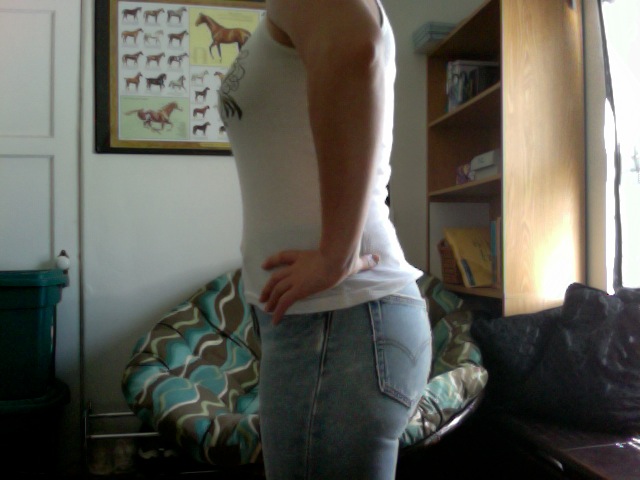
Now for a weight loss update. Considering my umm.. bumpy situation I haven't been able to get rid of any extra pounds, but I'm not worried. Here are my current measurements...


Neck 13"
Bust 42"
Under Bust 36"
Bicep (R) 12" (L)11.5"
Waist 47"
Hips 44.5"
Thigh (R) 28" (L) 27"
Calf (R) 16" (L) 16"


Just a reminder my last pre-pregnancy measurements were...

Neck- 12 3/4"
Bust- 39" (different bra)
Under Bust- 32 3/4"
Bicep (Flexed) 12 1/4" (not flexed) 11 1/4"
Waist- 31"
Hips- 38"
Thigh (thickest part) 25 1/5"
Calf- 15 1/2"

So overall I'm pleased because when you consider that I'm 28 weeks along measurement change is fully expected, but I haven't ballooned up like I did with my second child. Also I've recently fallen and have been unable to work out since Dec 15th. I fell down the stairs into my garage and broke my tailbone, cracked my sacrum, and tore my right round ligament. I went into the gym to work out with my trainer the following Tuesday but I was still unable to walk properly or climb stairs so she sent me home with strict orders not to come back until I had clearance from my doctor. Well clearance has not been granted because I've fallen twice since my initial fall. Argh! It's so frustrating. With my latest fall I had to have a NST (Non Stress Test) and another ultrasound was necessary. Baby is okay which is a relief. But I want to hit the gym because I feel like such a whale! I eagerly await the okay to work out again.

Tuesday, December 7, 2010

Big Baby, Bigger Mom?

An article I found on babble.com

A close friend told me recently that at one of her early pregnancy check-ups, her obstetrician told her she shouldn't gain more than 20 pounds. My friend is a thin, incredibly active and fit soon-to-be mother of three, so I was surprised to hear such strict advice.

But her doctor is not alone in scrutinizing pregnancy pounds. Over 60 percent of women in the U.S. gain more weight than recommended for their body mass index, according to the Institute of Medicine. This trend, alongside growing evidence that a mom's weight affects her baby in the womb, has brought the issue front and center for a lot of physicians.

A study published this year in The Lancet — a collaboration between Columbia University and Children's Hospital Boston — was the latest to show that mom's weight gain can affect her baby's health. The researchers tracked more than 500,000 women and over a million babies, finding a significant correlation between mom and baby's weight.

Women who gained upwards of 53 pounds were more than twice as likely to have a heavy baby (at least 8.8 pounds) as women who gained between 18 and 22. Women who gained between 44 and 49 pounds were almost twice as likely to have a heavy baby.

Since parents pass on weight tendencies through their DNA, the researchers had to sift apart the effects of genes from the effects of the moms' weight gain. So they compared birth weights of multiple kids with the same mom, and the relationship between pregnancy weight and birth weight still held up. If a mom gained more with one baby than the other, that baby was more likely to be heavy.

Birth weight and BMI (body mass index) later in life are related, so scientists and public health researchers think pre-programming of a baby's weight before he's born could be contributing to the nation's obesity epidemic. It's a cycle, they say — as the population gets heavier, more babies are coming out of the gate destined to be bigger and at higher risk for heart disease and diabetes.

Needless to say, moms don't like being scolded for the size of their bellies. It's a double whammy — weight is already a sensitive issue for many women, and the overwhelming amount of advice and warnings we get from the womb police while we're pregnant is just piled on. It's a vulnerable time, so adding a tsk-tsk to your regular weigh-in feels horrible.

" 'But I gained more weight and my baby is fine’ misses the point — that's not how studies work."
We can't ignore the science, but maybe we need to put things in perspective. Yes, there is strong evidence that pregnancy weight has an impact on babies' health (the study populations are large, and new data keeps re-affirming the connection). Scientists think that a mom's fat stores send chemical signals that cross the placenta and become part of the uterine environment, affecting the way the baby's own fat cells and metabolism develop and possibly altering the brain in small ways that translate into weight tendencies.

But the real concern is on the extreme ends of the spectrum. For example, in the early part of the 20th century, when weight recommendations were closer to 15 pounds, the risk was underweight babies and, accordingly, in the 1970s doctors started encouraging moms to pack it on a little more. Now doctors are most concerned with the opposite — overweight moms who tip the scales too much in the other direction.

In a way, it's not such a controversial idea after all: The extremes aren't good for us. Or our babies.

In fact, researchers say it may be a woman's pre-pregnancy weight that matters as much or more than what she gains with her baby, which is also part of the problem with telling moms to tighten up their belts. You can't just set ideal weight standards and tell pregnant women to figure it out — moms need support for staying healthy in pregnancy. Sure, there is an element of indulging for some women who finally feel they can cut loose when they get pregnant. But we can't deny that the same barriers to health for the general population — like a food system set up around processed foods, not whole ones — is also to blame.

But here's something that might help take the spotlight off mom for a minute: Last month, a Nature paper suggested that dad's diet affects his child's health, too. Through chemical tweaks that take place in the sperm, fathers were found to pass on unhealthy dietary effects to their babies.

Researchers at the University of New South Wales in Sydney, Australia fed one group of mice an unhealthy diet and the others a well-balanced one. As expected, the ones they beefed up got fat and showed signs of type 2 diabetes. When the groups went on to have babies, though, the dads who had been overfed were more likely than the healthy ones to have babies with symptoms of type 2 diabetes.

It's a provocative idea — that in addition to transferring genes that code for weight tendencies, dad could pass on the effects of his lifestyle, healthy or unhealthy. The researchers’ guess that 'epigenetic' factors are at play — these are not changes to a dad's DNA code, but changes to the signals that turn genes on and off.

In the end, the question of weight is complex, and studies like these point to differences across the population, not necessarily in your home (which is why "but I gained more weight and my baby is fine" misses the point — that's not how studies work). Of course we need to approach the topic with sensitivity and empathy for the bind some moms feel. But we can't just say it's unfair to focus on pregnancy weight when we're so diligent about everything else we do for our babies.

The Institute of Medicine's weight guidelines

BMI pre-pregnancy..................... Recommended pregnancy weight gain

Underweight
<18.5 ..................................... 28 to 40 lbs

Normal
18.5 – 24.9 .............................. 25 to 35 lbs

Overweight
25 – 29 ...................................... 15 to 25 lbs

Obese
>30 ......................................... 11 to 20 lbs


Written by: Heather Turgeon is a psychotherapist and science writer. She authors the weekly "science of kids" column for Babble and is a regular contributor to Strollerderby. Follow the science of kids to keep up with the latest research in child development and parenting.

Gothic Reading Challenge

Oh Boy am I excited!! I've signed up for the Gothic Reading Challenge for next year and I encourage you to do the same. Since my 'bump' has made its appearance I've had to pull back on my workouts a bit because it was making me sick. I'm not talking losing my lunch sick but heart racing, short of breath, over heating, about to pass out sick. It's rather disappointing to have to cut back, so I've decided to nurture my mind as well as my body. I'm thrilled at the thought of being engrossed in a book while breastfeeding my newest little one (coming April 2011). I enjoy escaping into a fantasy world of rich mind provoking literature.


There are four levels of participation to choose from:

A Little Madness - Read just 1 novel with Gothic elements.

The Darkness Within - Read 5 novels with Gothic elements.

A Maniacal Frenzy - Read 10 novels with Gothic elements.

Mad, Bad, and Dangerous to Know - Read 20 novels with Gothic elements.


Can you guess which I have chosen?

I think I will start with EAT,PRAY, LOVE... no I'm kidding ... haha made you think 'what the..?' for a millisecond didn't I! So far my list is as follows...(in no particular order)

The Vampire Academy series
The Undead and Unwed series
The following Anne Rice books even though I read a few in high school I have not read them all in order.

PLUS the books in my personal library I have had the opportunity to lose myself in yet. Trust me it is extensive.


Now for an update of my weight loss progress. NONE! I've actually gained 16lbs but I'm blaming it on the little one growing within my womb. All of my previous clothes still fit except for the fact that I cannot zip up my jeans due to a rather large belly protruding from them. And I totally use the belly band when I can and forgo putting on my size medium (yep medium!) maternity jeans because they just don't stay up... which is incredibly annoying. I was a size large during my first pregnancy, then an XL in my 2nd ... now I'm happy to say I wear medium.

I'm still working with my trainer once a week, and remain active at home... but I've had to stop bike riding due to my previously mentioned illness ( i.e. baby making me hyperventilate and overheat to the verge of passing out).

Overall I think I'm doing pretty well, and it's incredibly easy to not go overboard with my eating habits this time because we stopped buying junk when I started my new fitness/ health routine. Yes John still comes home from the store with donuts or other sweets occasionally but I find them easier to resist each day.

Our chickens are laying enough eggs each day that the boys and I can enjoy fresh organic cage free eggs everyday. And I keep a supply of carrots and apples on hand for snacks for myself, the boys, the goats, and the horses. And those Halloween pumpkins made a few very delicious Pumpkin Pies with only 1 cup of sugar in each one, and no preservatives which made me incredibly happy. Plus the way I figure it all the calories I burned while hand pureeing those pumpkins made for some nicely toned arms and a good reason to indulge in a slice or two.


Anyway tata for now... be sure to leave me a comment suggesting some mouth watering reading!

Tuesday, October 19, 2010

Supermarket Tips....

If you were Justin Bieber, eating well wouldn’t be nearly as hard. Ditto for Lady Gaga, LeBron James, Ashton Kutcher, Michael Bloomberg, and Derek Jeter. All those folks have one thing in common: vast wealth. And eating well can get really, really expensive.

Over the past few years, the cost of vegetables, meat, fruit, and other high-nutrition, low-calorie foods has increased by an average of 19.5 percent. Junk food, on the other hand, is getting cheaper—down by 1.8 percent. Researchers recently estimated that, on a junk-food diet, you could eat for $3.52 a day. But a healthy diet would cost a whopping $36.32 a day!

Fortunately, in researching our latest book, Eat This, Not That! 2011, we unearthed a slew of smart supermarket shopping tips that can help you navigate the aisles with ease. You’ll save money and calories at the same time. Now that’s a deal.

1. Fewer ingredients = healthier food
Why is food with fewer ingredients healthier? Because additives and preservatives signal added calories, not added nutrition. Real food fills you up with the nutrients that keep you healthy—like protein, fiber, and healthy fats.

Bonus Tip: Just announced! Check out our list of The Best Supermarket Foods of 2010!

2. “Good source of” may mean “bad for you”
You’ll see the claim “good source of” on cereals, crackers, and Pop-Tarts. The thing is, rarely are these vitamins worth the calories they’re embedded in. They’re usually just run-of-the-mill vitamins that processors are required to add to enriched flour—vitamins that can actually wash off your cereal the minute you add milk to it!

3. Work the edges
When it comes to planning your path through the supermarket, stick to the fringes and venture only strategically into the aisles. The reason: The edges of the supermarket are where you find the healthiest food: dairy, produce, meats, and seafood. The aisles? That’s junk-food haven, the processed-food jungle, the nutritional dead zone.

4. Look high and low
Food vendors pay “slotting fees” to ensure that their most-profitable foods get placed in the most conspicuous spots—meaning eye-level on the supermarket shelf. The problem with this practice is that “most profitable” generally means “cheapest to make” and “nutritionally inferior.” Make your selections from the top and bottom of the shelves, where smaller companies tend to congregate.

5. Beat the breakfast blues
The best breakfasts for all-day productivity are high in protein and low in refined carbohydrates, so even if there were no price difference, eggs would be a much better choice over a bowl of cereal (especially a sickly sweet variety). That said, there is a substantial price difference. Say you can scrounge five bowls from one box—that's 90 cents a meal (without the milk). A dozen eggs, though, makes six meals—each for an average of 31 cents. By eating cereal over eggs, you're spending three times as much money on a meal that’s not as healthy. Easy choice, right?

Bonus Tip: For more instant weight loss secrets, follow me right here on Twitter.

6. Buy frozen fruit in cold weather
The price of fresh fruits out of season is significantly higher than when they're in season, due to transportation costs. And if you want to get your money's worth, you'll need to eat them within three days of buying, so they don't spoil. One cup of frozen blueberries gives you just as much fiber as the raw variety, and a handful of fewer calories. While fresh blueberries offer 18 percent more vitamin C, that difference isn't worth the extra cost.

7. “Reduced fat” may make you fat
Sometimes, the full fat version of a product is more nutritious. Consider: Cookies and crackers often claim to contain “a third less fat than the original.” But that fat hasn’t just vanished—it’s been replaced by extra doses of sugar, starch, and sodium. They might have dropped the fat from 4 to 3 grams, but they’re hitting you with 2 grams extra sugar and 300 mg extra sodium.

8. Check yourself out
A study from the University of Arizona found that the more exposure a person has to temptation, the more likely he or she is to give in. That means you’re 25 percent more likely to buy a candy bar when you’re stuck in a line flanked by candy racks.

9. Shop on Wednesday nights
According to Progressive Grocer, only 11 percent of shoppers go to the store on Wednesdays, and only 4 percent of customers shop after 9 p.m. Why does this matter? For the same reason that you should check yourself out—you’ll avoid long lines, which means you’ll spend less time standing in front of calorie-laden impulse indulgences.

10. “Natural” doesn’t mean squat
Outside of meat and seafood, the word “Natural” when applied to foods is completely unregulated. So when you see 7Up Natural, a loaf of “natural” bread, or a product that claims to be “made with natural sugar,” that doesn’t really mean anything. For more outrageous examples of foods that sound healthy, but actually aren’t, be sure to check out—and beware of—these 25 “Healthy” Foods That Aren’t.

11. Bulk up when you can
Discount clubs like Costco and Sam’s Club are great—but only for things that won’t spoil and foods that won’t prove to be too tempting. For instance, toilet paper and frozen chicken are great to buy in bulk. A 15-pound bag of oranges or a pallet of Oreos is not.

12. Don’t buy the hype
Every year the food industry spends $30 billion on advertising, and nearly half of that goes toward convenience foods, candy, soda, and dessert. Make your purchases by comparing ingredient statements and nutrition labels—not by who stuck the cutest cartoon on the front of the box.

13. Choose chicken leg over breast
The chicken breast is the healthiest cut of meat you can buy. But the dark-meat chicken leg is almost equally healthy, will save you 89 cents a pound, and scores higher in nutritional value than all cuts of beef except for kidney and liver.

14. Ask when the next shipment arrives
Most restaurants receive shipments of fish or meat on certain days of the week, which means you don’t want to buy the fish the day before the next shipment arrives. The same might hold true for your own butcher or fish monger. Ask him when the shipment comes in, and buy on that day for the freshest product.

15. Look in unlikely places
Walmart has traditionally been considered a price leader in groceries, but only recently has the retailer started taking produce seriously. Now the chain is a great place to buy organic produce and dairy. According to a recent article in The Atlantic, Walmart's entry into the organic game may be a major factor in the dropping prices of organic foods. And of course, farmer's markets are still the best place for unique local foods and small-batch artisan products.

16. “Lightly sweetened” could mean “sugar overload”
This is another term that’s completely unregulated, so processors use it however they please. In Smart Start, that means 14 grams of sugar per cup. That’s more than Froot Loops.

Bonus Tip: For a list of other foods you should avoid at all costs, check out our shocking list of The NEW 20 Worst Foods in America.

17. Don’t fall for diet drinks
Here’s the thing about diet soda: It’s great if you’re using it as a stepping stone from full-sugar soda to water. But it’s counterproductive if you drink it every single day. That’s because research has found that artificial sweeteners make you crave real sugar—so drinking diet soda makes resisting super-sweetened foods and drinks that much harder.

18. Buy real juice
Most fruit drinks are made from only a fraction of real juice, and the rest is some unholy combination of sugar and water. What you want from a fruit juice is 100 percent juice—and no added sugar. That way you know that you’re getting as many nutrients from the drink as you possibly can, and none of the garbage. But, along those lines . . .

19. Don’t be 100 percent misled
Drinks may be labeled 100 percent pure juice, but that doesn't mean they're made exclusively with the advertised juice. Take Tropicana Pure 100% Juice Pomegranate Blueberry, for example. Pomegranate and blueberry get top billing here, even though the ingredient list reveals that pear, apple, and grape juices are among the first four ingredients. These juices are used because they're cheap to produce and they're very sweet—which means you're likely to come back for more. (To see more proof of how wayward beverages can utterly destroy your diet, check out the 20 Worst Drinks in America. Many of these drinks contain more than a day's worth of calories, sugar, and fat!)

20. “Zero grams of trans fat” may include trans fat!
Some products carry the “Zero grams of trans fat” claim when they do, in fact, contain trans fats. The FDA allows this claim as long as the food contains less than half a gram per serving. But serving size is whatever the food marketer wants it to be. So if the processor claims that, say, a serving is one cookie, you could easily get 3 full grams of trans fats by eating 6 “no trans fat” cookies. If you see “partially hydrogenated oil” on the ingredient statement, rest assured that it contains trans fat.

21. Compare the front label with the back
If all the previous tips about the importance of good ingredients hasn’t convinced you to do this, maybe Dean’s Guacamole will. Guacamole is good for you because it’s made from avocados, right? But look at Dean’s label: Whatever this “guacamole dip” is, it ain’t guacamole. Avocado makes up less than 2 percent of the food! Always read the ingredients list.

22. Steer clear of 100-calorie packs
In a 2007 study, Brown University researchers found that people ate the same amount of cookies and chips regardless of whether they ate from a large, multiserving bag or single-serving packs. The key factor: The actual amount of cookies and chips people kept in their homes.

23. Invest in smaller plates and bowls
Researchers have found that people will generally eat whatever food is in front of them—relying on environmental cues to know when to stop eating, rather than internal triggers of fullness. The average American plate has increased in diameter in the past 20 years—battle the bulge by buying (or using) smaller plates. Try 8- instead of 12-inch plates.

24. Consider canola oil
Save the pricey olive oil for dressing salads or drizzling lightly over grilled vegetables. Canola's neutral flavor is great for cooking, and it happens to have an even better ratio of monounsaturated to saturated fat than the vaunted extra virgin. Olive oil can cost as much as a dollar per ounce, while high-end canola costs about 25 cents.

25. Learn to love lentils
When going for grains, choose lentils over brown rice to save money. A pound-size bag has 11 grams of fiber and 10 grams of protein in each of its 13 servings. It's also one of the world's richest sources of folate, a B vitamin that helps form oxygen-carrying red blood cells and promotes communication between nerves cells. You'll gain all that good stuff, while saving an average of 41 cents per pound if you choose lentils over brown rice.

Wednesday, October 6, 2010

How Much Should You Weigh?

Maybe you've been struggling -- without success -- to get down to the size you were in high school or on your wedding day. But do you really need to go that low? The truth, experts say, is that you can weigh more than your ideal weight and still be healthy (not to mention happy).
If you're overweight, losing just 10% of your body weight is associated with a myriad of health benefits, including lowering blood pressure, blood cholesterol, and blood sugar, and reducing your risk for heart disease. Not only that, experts say, but this kind of weight loss is easier to attain and maintain, setting you up for success in the long run.
Your Weight "Set Point"
Just as your body temperature is programmed to stay around 98.6 degrees, your body weight is naturally regulated to stay within a range of 10%-20%, says Thomas Wadden, PhD, director of the Center for Weight and Eating Disorders at University of Pennsylvania Medical School. This weight range is known as the "set point."
A complex set of hormones, chemicals, and hunger signals help your body naturally maintain your weight within this range, says American Dietetic Association spokeswoman Dawn Jackson Blatner, RD.
It is not just a matter of genetics, though. Your eating and exercise habits can also help to determine your set point.
"Overeating swamps the internal regulatory system, and, as a result, the set point increases -- which is much easier to do than it is to lower it," says Wadden. The body adjusts to the higher weight and "resets" the set point to defend the new weight.
It is difficult, but not impossible, to set your range lower. "With changes in healthy eating and exercise behavior, you can lower your set point," says Blatner.
The 10% Solution to Weight Loss
A recent book, Break Through Your Set Point: How to Finally Lose the Weight You Want and Keep It Off, by George Blackburn, MD, suggests that maintaining a 10% loss for six months to a year helps your body adjust to the lower weight and thus reset the set point.
Wadden explains that when you lose large amounts of weight at once, you set up an internal struggle and hormones like ghrelin spike to make you hungrier as your body tries to defend its comfortable range.
Instead, experts recommend that you try losing 10% the old-fashioned way -- by slowly changing eating and exercise behaviors -- then maintain this new weight for a few months before trying to lose more. Not only will your body get the signal to lower its "set point," but you'll give yourself a chance to get used to new food choices, smaller portions, and regular exercise.
"When patients lose 10% it may not be the pant size they want, but they start to realize how a little weight loss impacts their health in very positive ways," says Blatner. "They feel better, sleep better, have more energy or less joint pain, and some people are able to reduce medications."
How Much Should I Weigh?
Most people overestimate how much weight they can realistically lose, which leads to frustration, says Blatner. To find your happy or healthy weight, Blatner suggests looking back on your weight history as an adult and identify a weight you were able to maintain naturally and fairly easily.
And if you've gained more than a few pounds since your wedding day, forget trying to fit into that bridal gown. "As you gain weight, you experience an increase in fat cell size and number, which will probably prevent you from getting back to your married weight," says Wadden.
Instead of focusing on the numbers on the scale, Blatner suggests setting behavioral goals: "Eat breakfast every day, go for daily walks, eat more fruits and vegetables -- when you set behavior goals, they are easier to accomplish and they make you feel good." Stick with these behaviors for 3-6 months and they will become part of your life.
Based on your current weight, eat about 10 calories per pound of nutritious food (low in fat, rich in lean protein, high in fiber), get regular exercise, and assess your weight after a month or so.
"Your weight will settle out and typically you will lose 10%, then hit a plateau, which is a good time to maintain the weight loss," says Wadden.
As you get to a healthy weight, you can go up to 12 calories per pound.
Tips for Weight Loss Success
Here are some tips from Blatner for weight loss success:
Eat regular meals. People who eat regular meals consume fewer calories than those who eat irregular meals.
Use a plate, sit down, and enjoy your meals. Folks who do this eat 43% smaller portions than those who eat out of containers or on the run, according to Blatner.
Get at least 30 minutes of moderate activity each day.
How much and what you eat makes a big difference. Enjoy normal portions of foods that are high in fiber (fruits, veggies, whole grains) and rich in lean or low fat protein is the secret to feeling full.
Think positive: Focus on the benefits of a healthier lifestyle rather than the scale.

What do you think Chubby Buddies?

Wednesday, September 8, 2010

A bump in the road


So I announced on Facebook that my husband and were expecting but I failed to mention it on here. So here it is.... I'm pregnant!

pregnancy calendar

The past few days were actually pretty rough on me, which caused a 5lb weight loss. Which I'm sure will come right back as soon as I can keep solid food down without feeling sick.

All in all though once I calmed down about my tummy popping out already I realized I haven't gained any weight really. The only thing I can say is that it redistributed to my hips and thighs. No one wants to carry extra weight there but eh... it's a part of carrying a life.

So weight... same

Neck 12.5"

Bust 36"

Under bust 34"

R.Bicep 11"

L.Bicep 11"

Waist 32"

Hips 40 1/4"

R. Thigh 25.5"

L. Thigh 24.5"

R. Calf 14.5"

L. Calf 14"

So my plan is to maintain my diet (or rather lifestyle change) and continue working out with my trainer. Because I definitely don't want to gain 45lbs with this one!

Friday, August 13, 2010

News ...


(Photo taken last week with my boys while on vacation)


So I am down to my high school size but not yet weight.... 12lbs more and my goal will be achieved. I've also gone down on my body fat percentage. Yeah!! Almost there!!!!

Monday, July 26, 2010

How Coffee Can Energize Your Workout

What do you think? This is an article I found via yahoo news.

Gym bag, check. Car keys, check. Coffee downed, check. Yes, a caffeine kick could be a valuable addition to your pre-exercise routine, delaying muscle fatigue and keeping you focused and energetic. You don't want to overdo it, though. Sleep problems, headaches, irregular heartbeat, high blood pressure, or maybe even a heart attack can result. Here's how to work caffeine into your workouts.

Match the amount to your body. "The larger you are, the more metabolically active tissue you have," says Nicholas Gant, director of the Exercise Nutrition and Metabolism Laboratory at the University of Auckland in New Zealand. "If you're a small person, your tissues don't use up as much, therefore you need a lesser dose." A very rough recommendation is 0.5 to 1.4 milligrams of caffeine per pound of body weight. Coffee averages about 20 mg per ounce, or 160 mg per 8-ounce cup. That's about the limit for a 130-pound woman, though a 200-pound could probably down a couple of cups. Go above 4 mg of caffeine per pound and your workout could be ruined by digestive distress, the jitters, and other unpleasant side effects.


Track your tolerance. Going by body weight alone doesn't take individual tolerance into account. If you're a caffeine newbie, a smaller dose will initially provide a noticeable difference. If coffee is already part of your daily routine, you're likely to need more for the same effect. For someone training for a marathon or other serious athletic event, says Gant, who advises many New Zealand Olympians, reducing caffeine from all sources—tea, soda, and foods like chocolate and energy bars in addition to coffee—can dramatically improve sleep quality, decrease blood levels of cortisol (a stress marker), and increase your body's caffeine sensitivity to give you an extra energy boost when you do imbibe just before the event. "Only use it on those few occasions that you're really going to need that pick-me-up," says Gant.

Go by the clock (and calendar). If coffee is programmed into your exercise schedule, drinking it 30 to 60 minutes before you start will put your blood level of caffeine at a peak during your workout. If you are a coffee regular and a big event is coming, like a marathon or 100-mile bike race, Gant recommends that you gradually taper down the week before, so that a modest amount the day of competition will get you going.

Add fuel to the fire. Getting juiced on caffeine doesn't put gas in the tank. Registered dietician Leslie Bonci, director of sports nutrition at the UPMC Center for Sports Medicine in Pittsburgh, recommends pairing your coffee with oatmeal or a small bagel with peanut butter before you exercise to avoid cramps. "Drinking coffee black with a small snack provides the fluid you need for hydration as well as the carbohydrate, sugar and sodium that the body needs to sustain itself," she says.

Consider the source. Because, the caffeine content of coffee can vary widely, it's hard to know how much you're actually taking in. Substituting for caffeine-spiked sports drinks like Gatorade or Powerade, says Gant, lets you monitor your intake more precisely just by reading the nutritional label. But don't confuse such drinks, which contain sugar and other carbs to keep the energy going, with sugar-free, caffeine-loaded "energy drinks" like Red Bull Sugarfree. The caffeine rush will be brief (and expensive)—"a lot of money for a flash of energy that won't be sustained," says Gant.

Don't sweat dehydration. Too much coffee and your body will suffer because caffeine is a diuretic and make you lose vital fluid—or so goes the belief. It's not true, says Bonci. "It's a common misconception that when you consume caffeine sometimes you feel the urge to void," she says. "But in studies that looked at the urine volume produced over 24 hours whether or not someone consumed caffeine, there's not a significant difference." The problem with the misconception is that it leads many a coffee drinker to compensate by drinking much more water than necessary, and that could send any jogger running for the nearest bush.

What?!?


Ok so something is totally confusing me. How am I losing clothing sizes but I'm not seeing a difference on the scale? Not that I'm complaining I love being able to wear something I haven't been able to wear in years. For example today I decided to try on a pair of jeans that I haven't been able to wear since August 2005. Yep that's right August of 2005, my favorite 'skinny jeans' have been on vacation. And today I was able to not only put them on but also breathe and move. What size are my favorite Levi's?? 33 x 34 ....shocking right?!? These jeans were my go to jeans when I was running heavy equipment when I came back from the Army, and I'm tremendously happy to be able to get back into them.


Wednesday, July 21, 2010

Weigh in

Current weight.... 150

My pace has slowed but I've also started attending International College 3 hours a night online via my Macbook, so that makes it rather difficult to maintain a steady workout schedule. To replace my regular trips to the gym and semi-regular bike rides with Taya I've increased how much work I do at home. I've gone outside for 2 and a half hours just about everyday this week and did intense yardwork. I pulled all of the Atlantis trees (wild weed trees that smell like nasty nachos) growing wild throughout my yard, rearranged the chicken coop, filled in the craters my pointers have blessed us with, tilled the garden by hand and more but hey you get the idea my yard is a LOT of work. However I still plan on riding on Friday, Saturday and Sunday or some other physical activity with my gal.

As for my diet... ugh. I'm still following it. However I have added Atkins protein shakes and Premier Protein shakes (found at Costco) as meal replacements... usually breakfast because I am SO SICK of plain oatmeal...blech. I made some last Friday morning and I actually gagged trying to force it down. I try to drink an Atkins shake in the afternoon as a snack because I cannot start my day off with these because they tend to make me feel a little sick on an empty stomach which doesn't happen with the Premier Protein shakes.

Something to consider when you decide on a diet... there's no real worrying about what your going to make for lunch or dinner. Once you have a meal plan that's it. No worries. Just stick to serving sizes and you'll be set! Here is my daily meal plan:

Breakfast- Quaker Oatmeal, Original Substitutes- Egg Whites, Premier Protein shake

Lunch- Chicken Breast and Peas/ Broccoli Substitutes- Shredded Chicken Sandwich, Tuna (plain)

Snack- Pure Protein Bar Substitutes- Atkins Protein shake, Atkins peanut/almond cluster bar, Fresh Fruit

Dinner- Repeat Lunch


Now there are nights when I switch the chicken for another meat source but I try not to do that too often, and I do have splurge items... No sugar added Klondike Bars and Sugar Free Carmel Light Frap ...yum! Oh and the only thing I drink is water, water water (except coffee on Sundays ,1 cup, and tea ,plain, when I'm sick... like now)

The big draw back to my diet would have to be ... gas. Yep that's right, those Atkins snacks and maybe the broccoli make me a big ole gas ball. So I try to watch my intake.


**I would love it if some you out there in diet land would share your experiences with me. So send me a message and be a guest blogger. Because what works for me doesn't necessarily work for others.**

Thursday, July 8, 2010

Slow progress...


So my weight tonight at 8:45pm was 155lbs. Considering I weighed 153lbs a couple of days ago I was pretty disappointed until I realized ... 'you dummy you normally weigh in the morning' so when you factor in that I've been eating all day 155lbs is not bad, not bad at all. So the last time I posted measurements was on a Thursday so why not do them again.

Neck- 12 3/4"
Bust- 39" (different bra)
Under Bust- 32 3/4"
Bicep (Flexed) 12 1/4" (not flexed) 11 1/4"
Waist- 31"
Hips- 38"
Thigh (thickest part) 25 1/5"
Calf- 15 1/2"


Yeah so I lost a little everywhere except my legs, but I'm happy with the loss anyway. Especially considering that I haven't been able to workout since starting my on-line computer graphics class last week. It's Monday- Friday 6pm-9pm. Whew ... that makes it incredibly hard to fit in gym time.


(Definitely need to work on this some more!)

Monday, July 5, 2010

Post-Op WLS: Do You Believe?

grrr

I went to the doctor last week and of course they weighed me. 155lbs @ 4:30pm. The doc then lectured me about "health risk". He said I'm in danger of getting diabetes and said I AM considered OBESE! Can you believe it?! I'm 5'6" and I weighed in at 153lbs yesterday. OBESE, OBESE HA!! I no longer have rolls or under boob boobs so my docs misdirected lecture needs to go elsewhere.Hmmpf!

Photo taken today...

Friday, July 2, 2010

My body is shrinking!!

Seriously it is... I looked down today while I was driving and realized I've lost 2 cup sizes and my tummy is just about flat even while sitting!! Amazing!! And really it is sooo much easier to continue dieting when I can SEE progress. It's one thing to feel better, but to actually see a difference is exhilarating!

So here are my progress photos and no laughing about me being in a dress with color.... I'm exploring other options other than my standard black...


Thursday, June 24, 2010

The body of the obese?

So before my other trainer took a leave of absence she did a body fat test on me and calculated my body fat to 32%. Wowzers. That's in the OBESE/ HEALTH RISK range. Who knew? Certainly not me. Here I am 4 weeks later and my new trainer sent me this message...

Hi Shawnra! I calculated your body fat at 23.8%. Great job! It has dropped significantly from health risk to the upper end of average. Keep up your hard work. Lets try and get it to 22% and that will put you right in the middle of the average category!
See you soon!

So when I jokingly told John... sheesh I'm obese, or I'm such a whale...turns out I was right. But now I'm working on becoming 'average'...HA!

Current Stats:

Height 5'6"
Weight 158
Neck 13"
Bust 38"
Under Bust 33.25"
Bicep 12"(flexed) 11.5" (not flexing)
Waist 32"
Hips 38.75"
Thigh (thickest part) 25.5"
Calf 15.5"